LOVE ON THE STREETS
April 03, 2026 by Extinction Rebellion
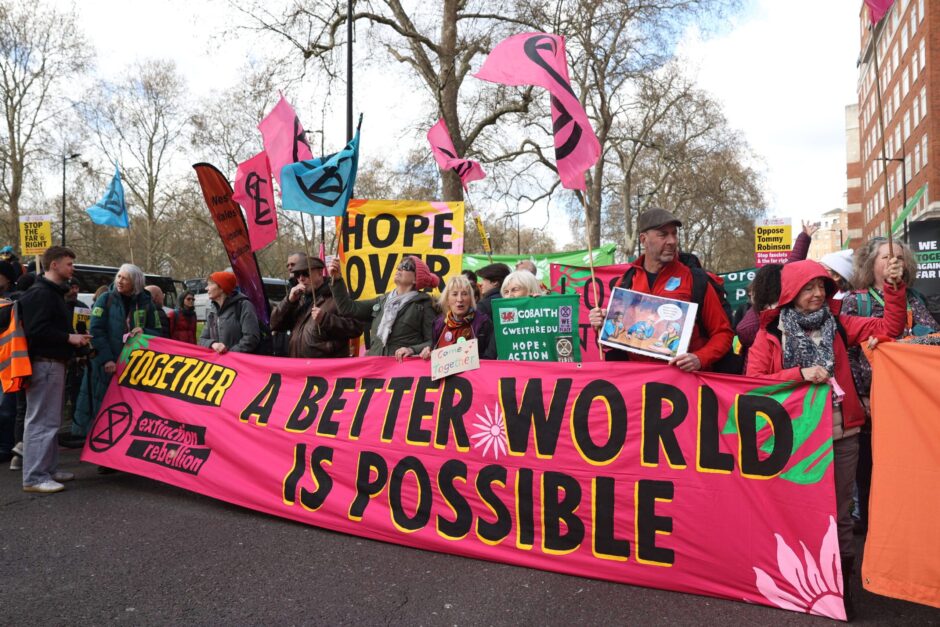
There was a moment at the Together march on Saturday 28th March that felt like a homecoming.
Hundreds of thousands of people filling the streets of London: colour, music, bodies taking up space with intention and joy. For those of us who have spent years learning how to do this, who lived through the policing bill protests and the injunctions and the slow bureaucratic grind designed to make organising feel impossible, it was something to stand inside and just breathe. This is what it looks like when the walls get pushed back out.
The very same day as the Together march, the third “No Kings” protest took place in the USA, drawing an estimated eight million participants across more than 3,300 sites nationwide. Their message felt aligned: “power belongs to the people – not to wannabe kings or their billionaire cronies.”
XR was part of the climate justice bloc of the Together procession, alongside Campaign against Climate Change, Degrowth London, Greenpeace, Faith for the Climate, Fossil Free London, Friends of the Earth, War on Want and others: because climate justice, racial justice and economic justice are not separate causes that happened to find each other on a Saturday afternoon. They share the same roots. And increasingly, the same opposition.
To understand this, it helps to follow the money.
In 2016, three days after the Brexit vote, Jeffrey Epstein emailed Peter Thiel: Palantir founder, early Facebook investor, architect of some of the most powerful surveillance technology on earth. “Brexit,” he wrote, “just the beginning.” The beginning of what? “Return to tribalism. Counter to globalisation. Amazing new alliances.”
Most people, however they vote (or not), are working from the same basic feeling right now. That something is broken. That the cost of everything keeps rising while the quality of life keeps falling. That the people making decisions about their lives are somewhere very far away and not especially interested in what they think. These feelings are correct. It is not paranoia or ignorance or the result of spending too much time on the wrong websites. The system is taking from all of us and extracting the planet’s resources while concentrating wealth and power in fewer and fewer hands.
Where people differ is in who they blame for it. And that difference has been very, very useful to some people.
Epstein was toasting it. While millions of people voted Leave out of genuine frustration with a system that had failed them; and they were right that something had failed them; a small group of extraordinarily wealthy men were watching the results come in and raising a glass. Not because they shared those frustrations. Because division, it turns out, is an excellent hedge. Tribes don’t organise across their differences. They don’t ask who actually owns the infrastructure. They argue with each other instead.
This is the veil that is lifting. And it’s lifting for people across the political spectrum, which is why Saturday felt the way it did.
Because what has happened in the last decade through Brexit and the pandemic, the acceleration of the far right across Europe; the rapid dismantling of democratic norms; the fossil fuel industry funding parties like Reform to the tune of millions while they promise to scrap net zero and cut energy bills; the same names appearing across Silicon Valley and oil finance and far-right movements, doesn’t feel like coincidence when you lay it out. It feels like a plan that was always longer than one election cycle.
The economist Yanis Varoufakis has a name for where that plan has brought us: technofeudalism. The idea is simple and clarifying. Real power has migrated away from governments and into the hands of a very small number of people who own the platforms, the data infrastructure, the energy systems, the clouds our information lives in. Elections still happen. But the decisions that actually shape daily life eg. what we can afford, what we can say, what gets built and what gets burned, are increasingly made by people nobody voted for and nobody can remove. This is why voting feels hollow to so many people right now. It’s not apathy. It’s accuracy.
And underneath all of it, the tech platforms; the political movements; the culture wars, fossil fuels sit at the centre. They always have. The whole system was built on the logic of extraction: take what you need, externalise the cost, move on. The planet, other people’s labour, democratic institutions, all of it available to be used and discarded. Nature isn’t incidental to this story. It is what this story is about.
Which is why the pandemic moment mattered so much. Nature didn’t wait for permission. It came back fast, visibly, in places it had been pushed out of for decades. People saw it. Heard it. Felt it. And that experience settled into something that couldn’t quite be undone: a recognition, however brief, that the world we’d been told was the only possible one wasn’t. That the noise and the speed and the extraction were choices, not inevitabilities.
The industries that depend on us forgetting that have been louder and more aggressive ever since. The tribalism Epstein was toasting in 2016 is useful precisely because it stops people from looking at what they have in common: and at who benefits when they don’t.
People who are genuinely winning don’t need to do any of that.
Saturday felt like a divorce party. Not bitter or angry: actually quite the opposite. The kind where everyone turns up in their best outfit and dances because they’re not sad, they’re free. They’re together.
This week, the tone shifts again. Some of us are heading to the flat fields of Suffolk, where the Lakenheath Alliance for Peace is holding a peace camp outside RAF Lakenheath: opposing the return of US nuclear weapons to British soil, without public debate, without a democratic decision anywhere in sight.
The same question at the centre of it: who decides?
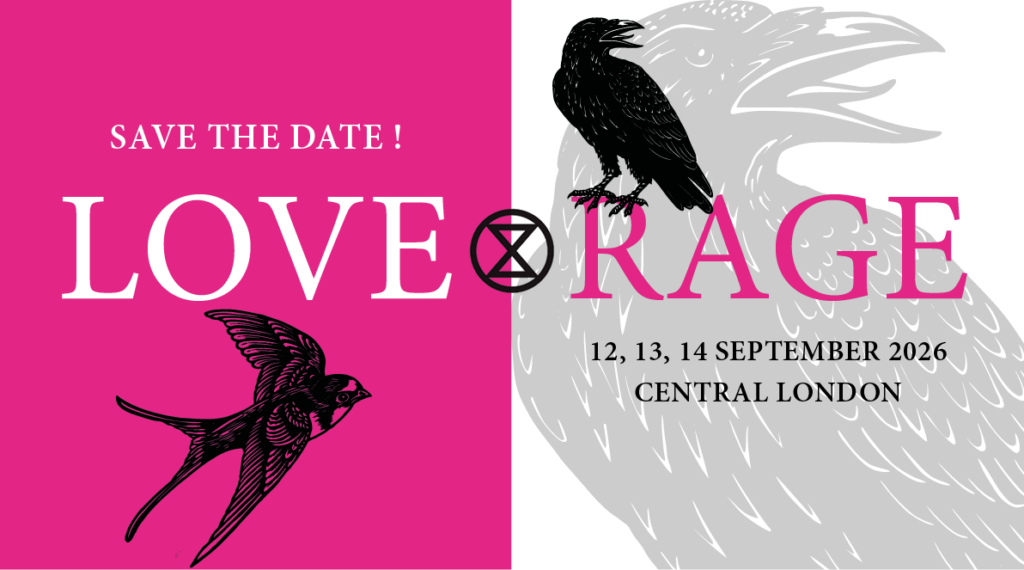
We’re building towards something this September that tries to hold both sides of how it feels to stand up and take direct action for all living things:
LOVE & RAGE 12–14th September — join the love&rage telegram to get involved and keep updated.
Feature photograph by Gareth Morris